Kandyan Dance: Understanding Sri Lanka's Classical Performance Tradition
Kandyan dance is not folk dance. It is a classical performance tradition with a documented history going back several centuries, a rigorous system of training that takes years to master, and a visual vocabulary of precise gestures, footwork, and costume that communicates specific meanings within the tradition. When you see it performed well, you understand immediately that you are in the presence of something with real weight.
The costume alone is extraordinary. White and gold, with a headdress that fans out in a semicircle behind the dancer's head, a chest piece of layered silver, and bells at the ankles that ring with each foot strike. The effect under stage lighting is genuinely regal. Historically this was court performance — entertainment for kings — and the visual grandeur reflects that origin.
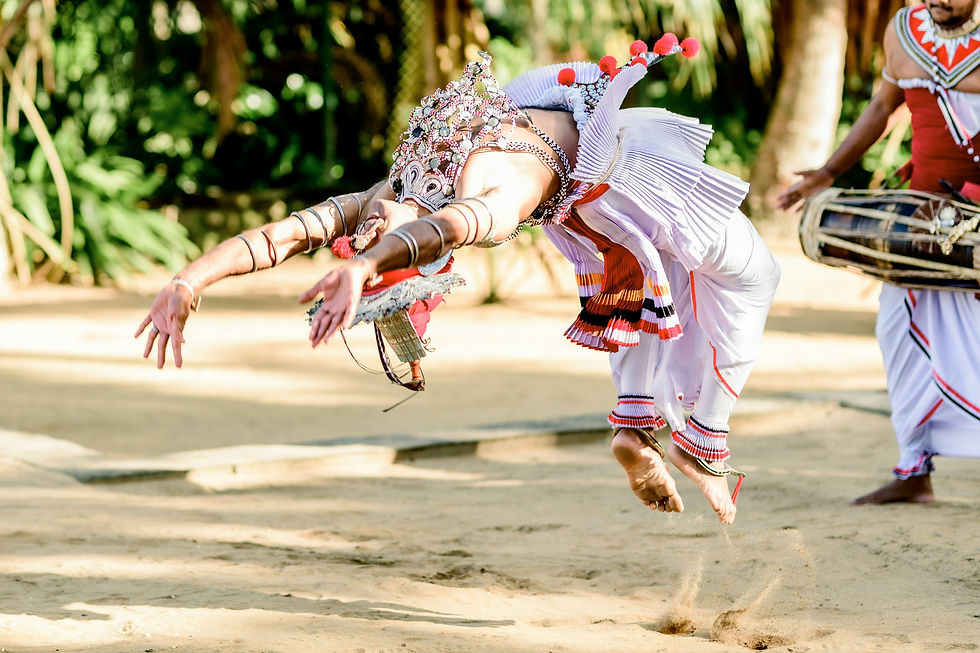
The drumming tradition associated with Kandyan dance is a separate art form. The Geta Bera drum, the primary instrument of Kandyan performance, is played with both hands in patterns of extraordinary complexity. Master drummers here are revered in the way that concert pianists are revered elsewhere. The rhythm structures are ancient and the training to play them properly takes over a decade.
See Kandyan dance in Kandy, not at a hotel cultural show. The Kandyan Arts Association Theatre near the Temple of the Tooth puts on nightly performances that include the full range of the tradition: Kandyan dance, low country masked dance, fire walking, and plate spinning. It is not the most intimate setting but the quality of the performers and the breadth of what they cover makes it the right place to start. If you can arrange a visit to a school where young dancers are training, do so. Watching a ten year old move through forms they have been practising since they could walk is one of the more quietly extraordinary things Sri Lanka has to offer.


Comments